
Guide · Troubleshooting · Naples FL
Why Won’t My Garage Door Close? Nine Causes, Ranked
Start at the top. Seven of these nine cost nothing or almost nothing to fix, and you can check most of them in two minutes.
Read this first. If the door starts to close and then goes back up, the opener is doing its job — something told it there was an obstruction. If the door does not move at all, that is a different problem and you should skip to cause seven. The behaviour tells you which half of this list to read.
Why your garage door will not close, in order of likelihood
1. The safety sensors are out of alignment
This is the answer more often than everything else combined. Two photo eyes sit about six inches off the floor on each side of the opening, and they have to see each other. A bike, a bin, a storage rack, a wheelbarrow handle or a foot in passing knocks one a couple of degrees and that is enough.
Look at the small LEDs on each sensor. On most brands one is steady amber (the sender) and one is steady green (the receiver). If the green one is off, flickering or blinking, they are not aligned. Loosen the wing nut, aim it at the other one, and watch until the light goes steady. Cost: nothing.
2. Something is in the beam
Obvious, and still the second most common answer. A stray leaf, a cobweb hanging in the beam, a low-slung cable, a pool noodle. Run your hand along the path between the two sensors before you assume anything is broken.
3. The sensor lenses are dirty or corroded
Very common in Naples Park, Marco Island and anywhere near the water. Salt film on the lens scatters the beam and corrosion at the wire terminals gives an intermittent connection. Wipe the lenses with a dry cloth. If the sensor light flickers when you wiggle the wire, the terminals have gone and the sensor needs replacing.
4. The close-force setting is too low
Openers have a downforce adjustment, and if it is set too low the opener reads the door’s own weight as an obstruction and reverses. This drifts over time, and it also gets worse as the springs weaken — so a door that needs a force adjustment often really needs springs.
5. The travel limit is set past the floor
If the opener is trying to drive the door below the floor, it hits resistance at the slab, decides it is an obstruction and reverses. The tell is a door that touches down and then immediately goes back up. The down-limit needs moving up slightly.
6. The lock button or vacation mode is on
Most wall consoles have a lock button. Pressed accidentally, it disables the remotes and sometimes the whole close cycle, usually with a blinking LED on the console. Hold it for a few seconds to release.
Checked all six and it still will not close?
Then it is mechanical, and the next three are worth a professional. Call and describe what you saw.
7. The door is off track or binding
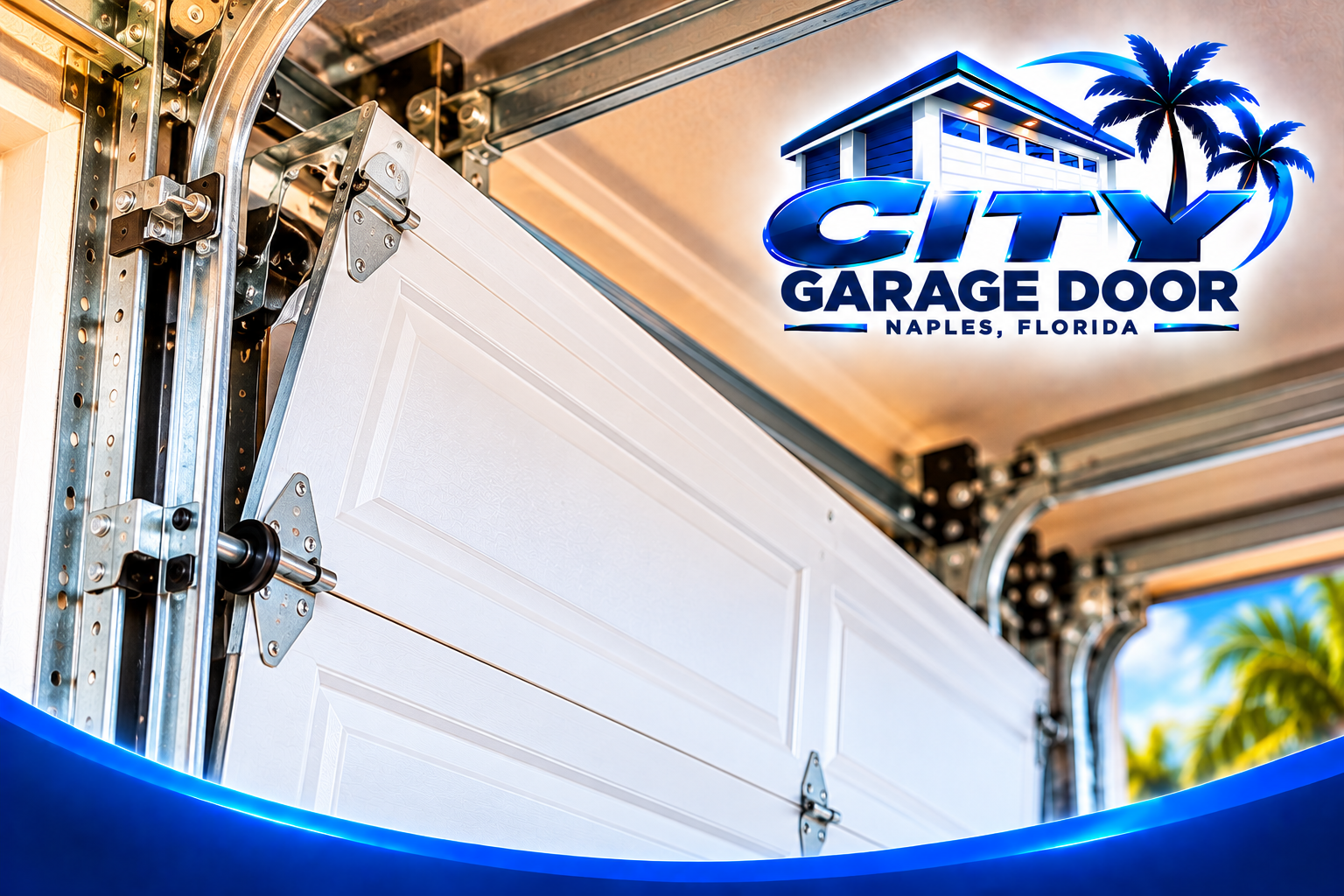
If the door does not move at all, or moves and grinds, look at the rollers where the vertical track curves into the horizontal. A roller out of the rail, a bent section of track or a door sitting visibly crooked all stop the close cycle dead. Stop using the opener — forcing a binding door creases the panels. See off track repair.
8. A cable has come off the drum
One side hangs lower than the other, or there is slack cable coiled beside the drum. A door on one cable is under genuine load and should not be operated at all. Cable repair is from $129 and takes about an hour.
9. A spring has broken
If the door also will not open, or the opener hums and lifts a few inches before quitting, look at the shaft above the door. A torsion spring with a finger-wide gap in the coil has snapped. Stop pressing the button — you are asking a motor built to move 10 pounds to lift 200. See spring repair.
The two-minute check, in order
- Watch what the door actually does. Reverses after starting down, or does not move at all? That splits the list.
- Look at the two sensor lights. Steady on both sides, or one off or flickering?
- Sweep the beam path. Anything at all between the two eyes.
- Wipe both lenses. A dry cloth, five seconds each.
- Wiggle the sensor wires. A light that flickers means a bad terminal.
- Check the wall console lock light. Hold the lock button to release it.
- Look at the track curve and the cables. If anything is out of the rail or hanging slack, stop and call.
What not to do
Do not disconnect or bypass the safety sensors. They have been required on residential openers since 1993 and they exist because garage doors used to kill children. An opener running without them is a liability in your own house, and any company that suggests it as a fix should not be in your garage.
Do not hold the wall button to force the door down past a reversal, except briefly and deliberately to close a door you can see is clear. Do not keep cycling a door that grinds or binds.
Related
We check the free causes first
If it is a sensor or a limit setting, that is what we will tell you — and it is the cheapest visit we do.
Frequently asked questions
Why does my garage door start to close then go back up?
Almost always the safety sensors — misaligned, blocked, dirty or corroded. The next most likely causes are a close-force setting that is too low or a down-travel limit set past the floor.
How do I realign garage door sensors?
Loosen the wing nut on the bracket, aim the sensor at its partner across the opening, and watch the indicator light. When it goes steady rather than flickering or off, tighten it back up.
Can I disable the garage door sensors?
No. Photo-eye reversal has been required on residential openers in the United States since 1993, and the requirement exists because of fatal accidents. Fix the sensor rather than bypassing it.
My garage door will not move at all. Is that the sensors?
No. Sensors stop the door closing, not opening. A door that will not move at all usually has a broken spring, a cable off the drum, or is off track.
How much does it cost to fix a garage door that will not close?
If it is sensors, often just a service visit at from $99 and sometimes nothing at all if we can talk you through it. Replacement sensors fitted run from $99. Mechanical causes such as cables or springs are from $129.
Should I keep pressing the button?
No. If the door is binding, off track or on a broken spring, every cycle makes the damage worse and can turn a repair into a replacement.
Still not sure? Send us a photo and we will tell you straight.
Tell Us What the Door Is Doing
You get the price before anyone drives out, and if you decide not to go ahead you owe us nothing.